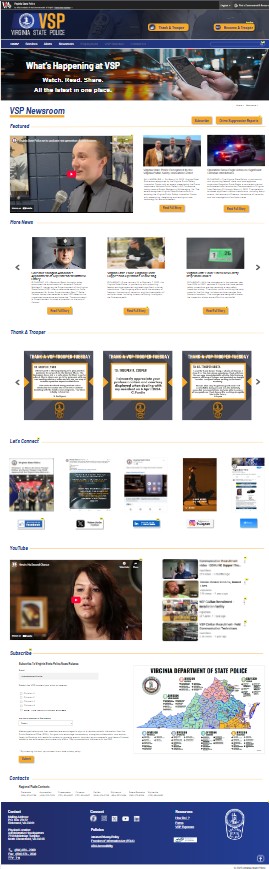
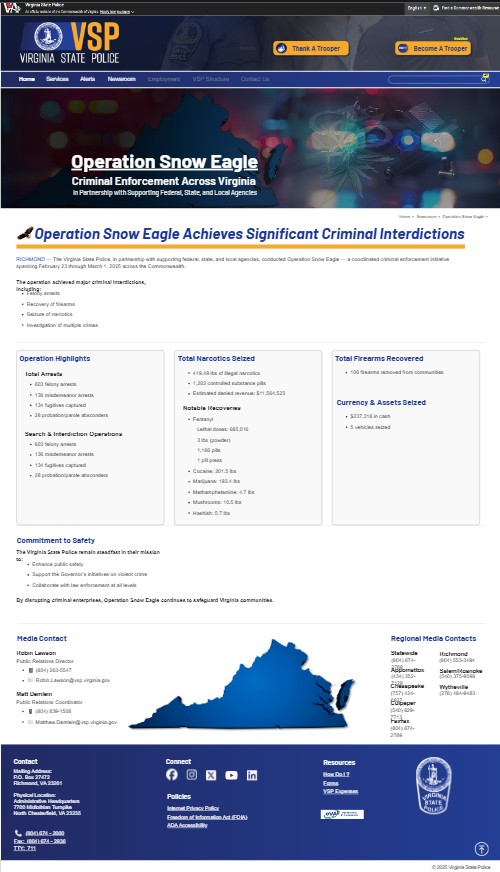
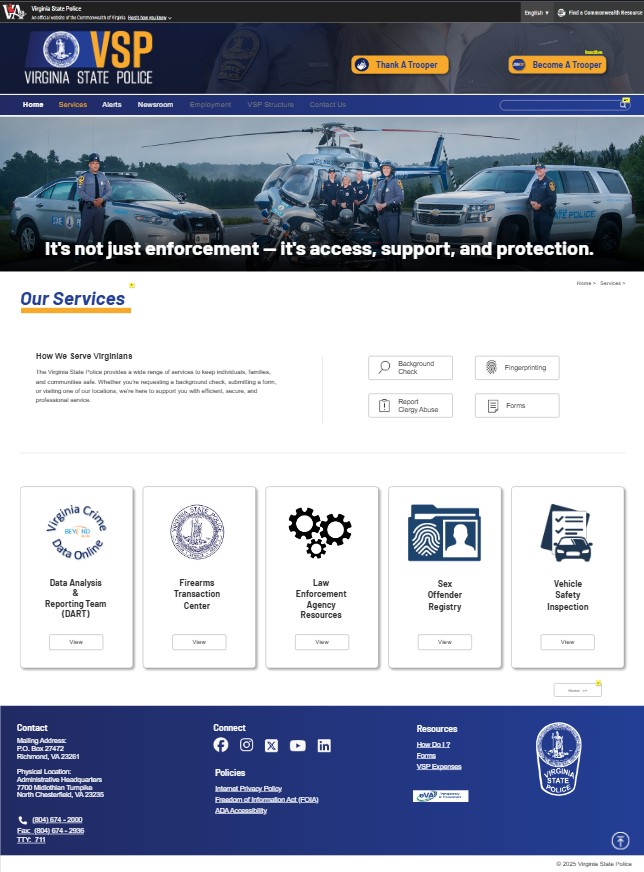
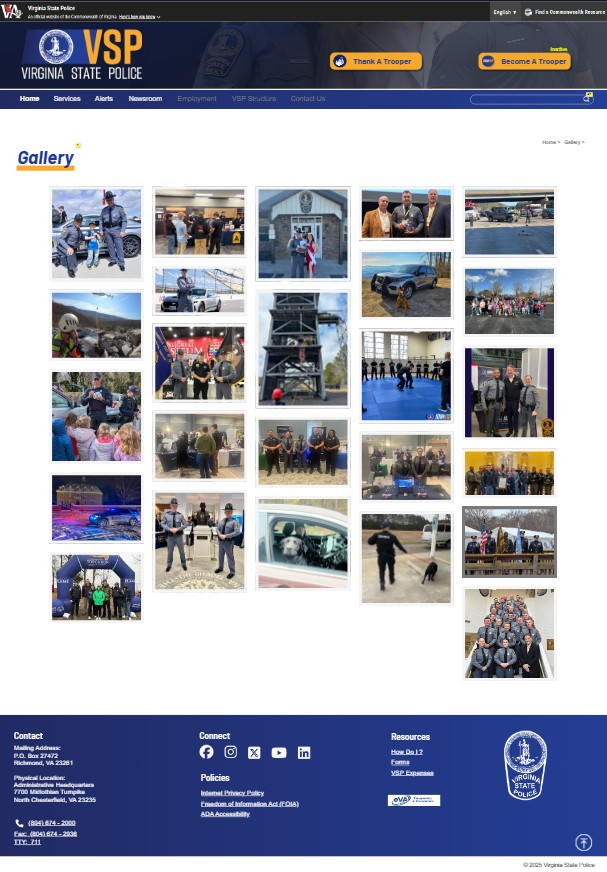
Project Details
Overview & Objectives
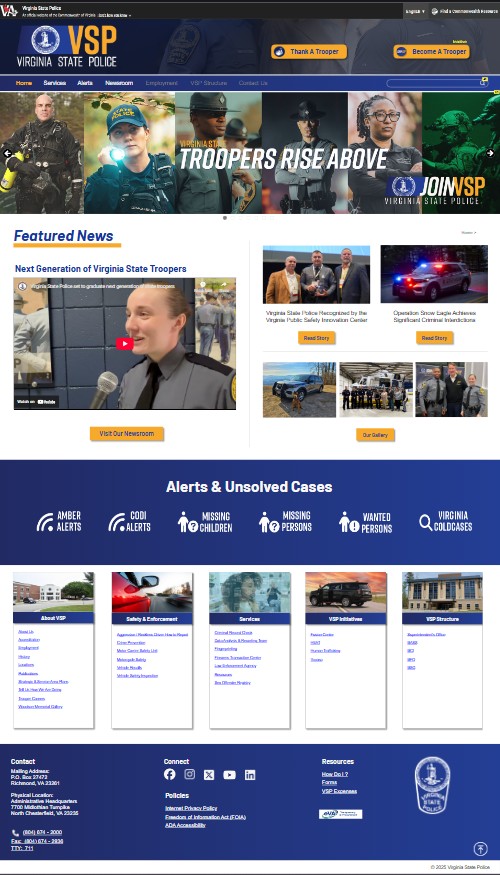
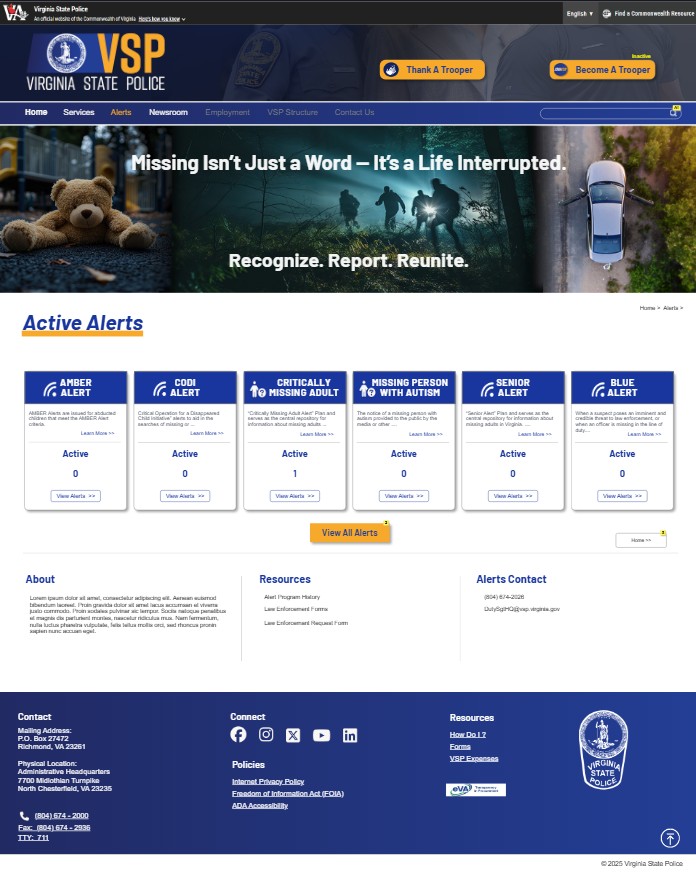
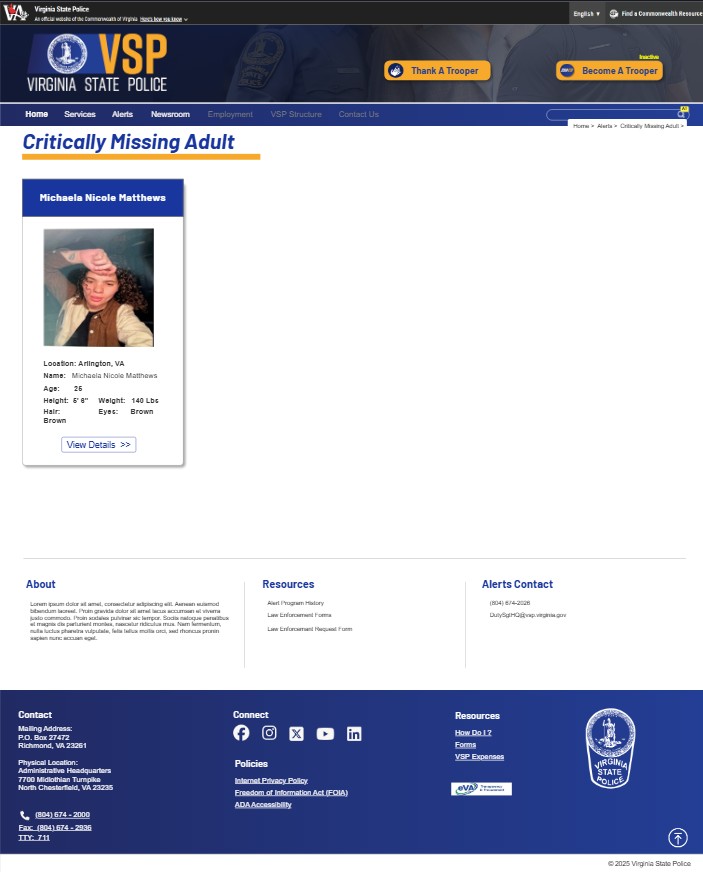
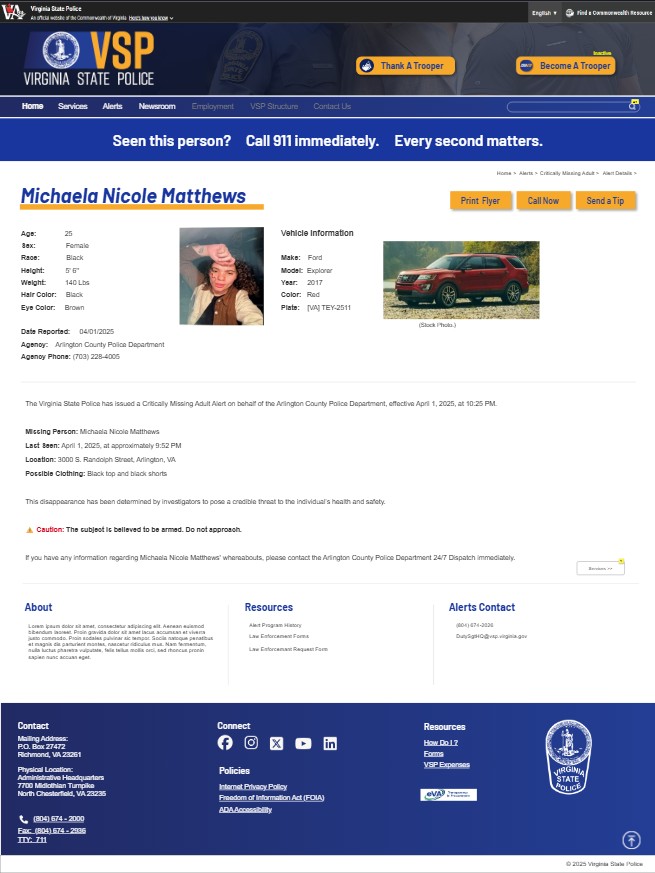
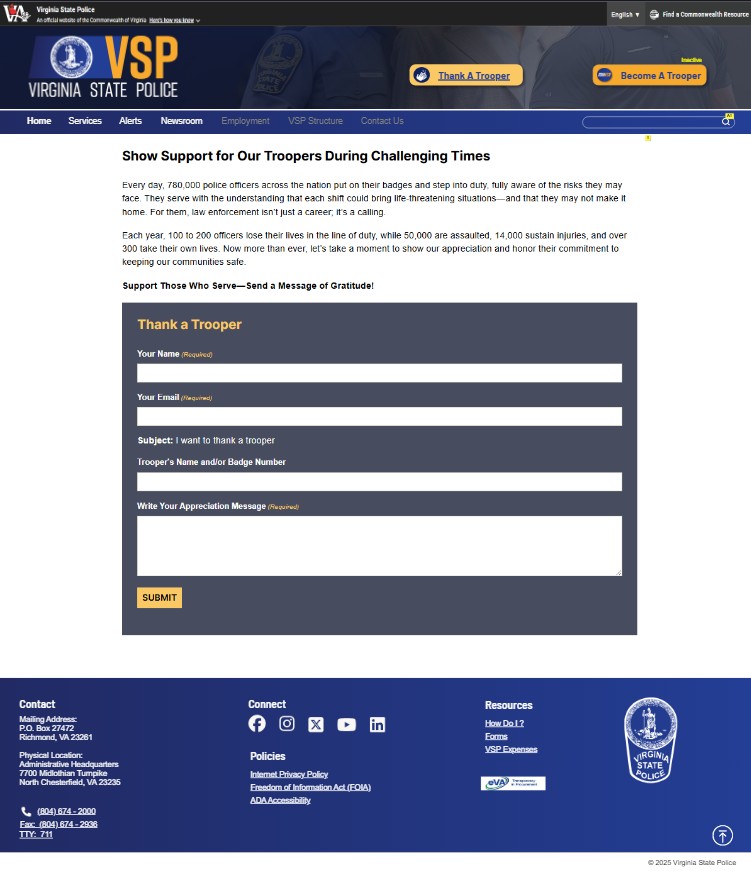
The Virginia State Police partnered with me to begin modernizing several public-facing websites as part of a broader initiative to improve accessibility, security, and usability across state digital properties. Many of the existing sites were built on aging infrastructure and no longer aligned with current Commonwealth modernization standards, accessibility requirements, or evolving public expectations.
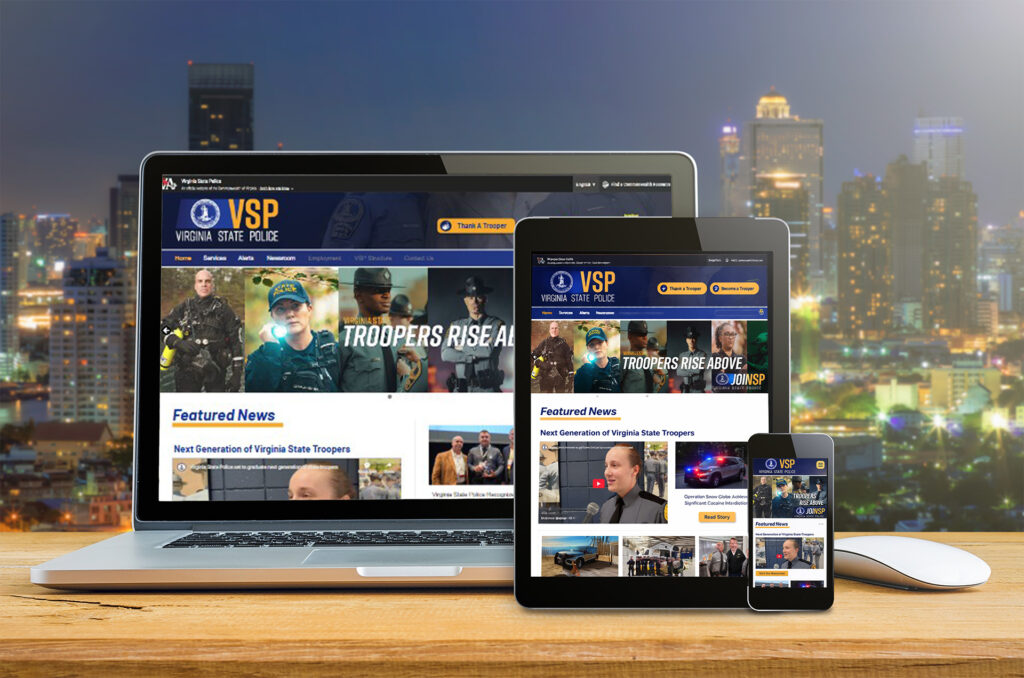
The goal of this effort was to redesign and rebuild these platforms with a focus on clarity, compliance, and long-term maintainability. This included improving navigation and content structure, addressing accessibility gaps, strengthening security practices, and establishing a more consistent, modern user experience across devices.
Although the project ended earlier than planned due to significant budget cuts, development had already begun, design and technical direction were established, and foundational work was underway. Despite its early conclusion, this project provided meaningful collaboration with executive leadership and reinforced the importance of clear communication, iterative delivery, and adaptable planning in a government environment.
Role & Responsibilities
I served as the full-stack developer on this project, responsible for the design, development, and early implementation of the modernization effort. My role spanned user experience design, front-end and back-end development, and preparation for launch, with a focus on building a scalable and compliant foundation for long-term use.
I worked within an Agile methodology, collaborating closely with Virginia State Police leadership, stakeholders, and technical teams. This included translating executive goals into technical solutions, delivering iterative demos, and maintaining clear communication around progress, risks, and next steps.
Key responsibilities included:
- Designing updated UI/UX patterns to improve clarity, accessibility, and usability
- Developing responsive front-end components using modern HTML, CSS, and JavaScript
- Implementing back-end functionality and content structures to support maintainability and future growth
- Addressing accessibility and security considerations early in the development process
- Participating in sprint planning, reviews, and stakeholder demonstrations
- Communicating progress and technical decisions to executive and leadership teams
Project Outcome & Learnings
Although the modernization initiative concluded earlier than planned due to major budget cuts, the project delivered meaningful progress and valuable outcomes. Core design and development work was underway, technical direction had been established, and modernization standards were clearly defined for future continuation.
Throughout the engagement, I worked in an Agile environment, participating in sprint planning, reviews, and iterative demos to keep leadership and stakeholders informed. This approach proved especially valuable in a government setting, where priorities can shift quickly and transparency is critical.
As part of the modernization effort, I explored and evaluated multiple technology options, including TerminalFour, AWS, and Cloudflare, to determine the most appropriate stack for long-term scalability, security, and compliance. This included hands-on exploration of TerminalFour and direct one-on-one training sessions with TerminalFour’s developer to better understand platform capabilities, constraints, and best practices.
I collaborated closely with VITA to ensure all work aligned with Commonwealth website standards and requirements. In parallel, I provided ongoing maintenance and technical support for existing public-facing Virginia State Police websites, including responding to high-traffic events during Wireless Emergency Alerts (WEA). These events required rapid troubleshooting and coordination to maintain site availability under heavy load.
Additional outcomes included working with engineering teams to address the F5 load balancer challenge that surfaced as a white 504 error page, improving both user experience and diagnostic clarity during outages. I also partnered with Information Security Officers (ISO) to ensure each effort met security expectations and followed approved practices.
While the project’s early conclusion was a disappointment, it reinforced the importance of adaptability, cross-team collaboration, and proactive communication in large, regulated environments. The experience strengthened my ability to contribute effectively to modernization efforts, navigate enterprise constraints, and deliver meaningful progress even amid shifting timelines and budgets.
Screenshots